

How to reduce no-shows at your restaurant
The fixes are simple, and none of them means being hard on your guests.
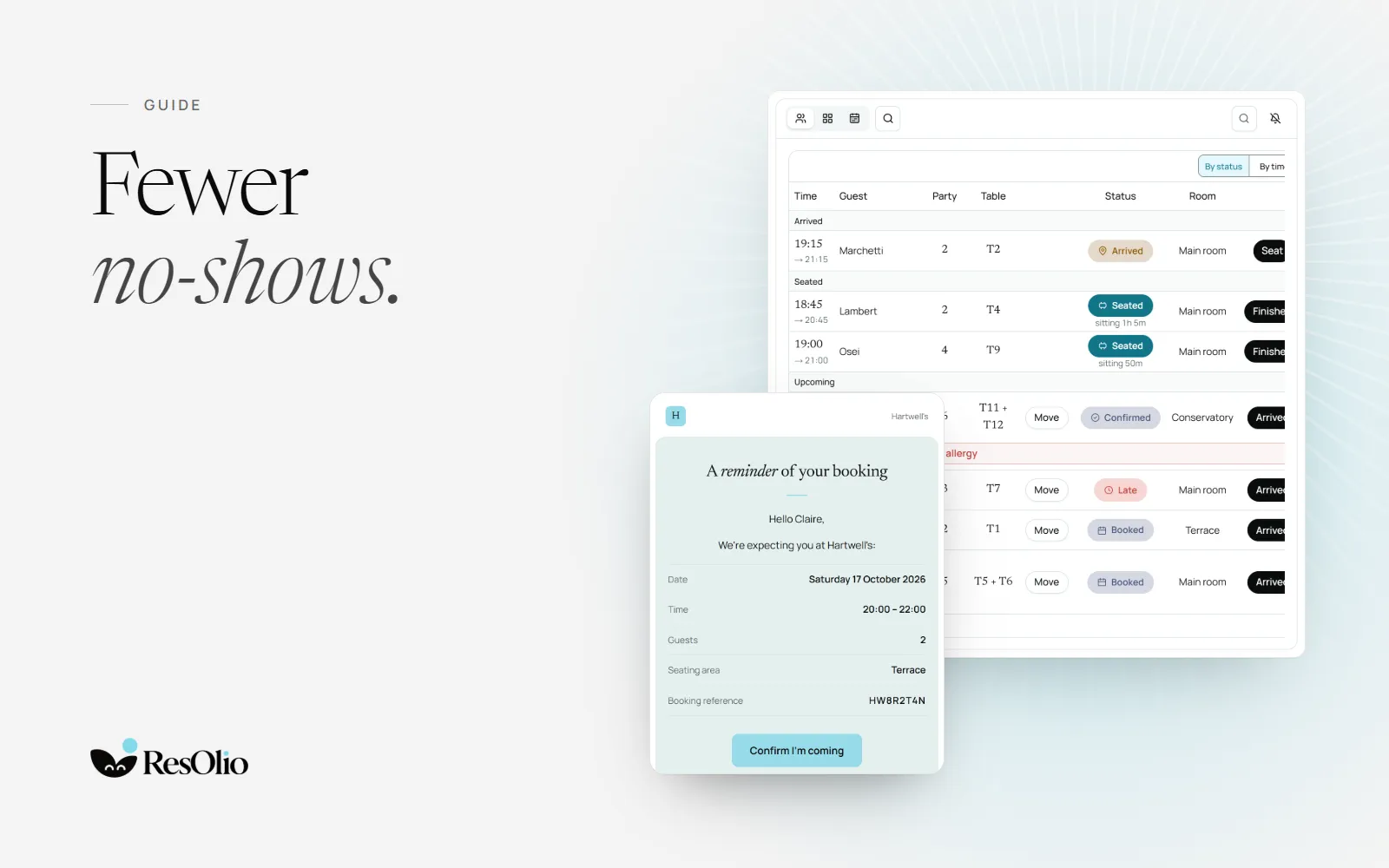
A no-show is a table you held, and turned other guests away for, that nobody sat at. You will never stop every one. But you can stop many of them, with a few habits and the right settings.
Why guests don’t turn up
A no-show is rarely meant as rude. The usual reasons are ordinary. The booking was made weeks ago and forgotten. Plans changed. The group booked two places and chose one. Or cancelling looked like more work than staying away.
Each reason has its own fix. A reminder answers forgetting. Asking for a reply answers silence. An easy way to cancel answers changed plans. A clear rule answers the rest.
1. Send a reminder before the night
A reminder is the cheapest fix there is. It reaches the guest while there is still time to tell you their plans have changed.
The evidence is clearest in healthcare, where missed appointments are measured closely. A Cochrane review of text reminders found attendance of about 79% with a reminder, against about 68% with none (2013). A table is not a hospital appointment, but forgetting works the same way.
- Send it about a day before. Early enough to change plans, close enough to remember.
- Mind the hour. A reminder due in the middle of the night should wait for the morning.
- Say everything once. The day, the time, the party size, your address, and a way to change or cancel.
- Skip same-day bookings. A table booked this afternoon is still fresh in the guest’s mind.
2. Ask guests to confirm
A reminder informs. A request to confirm asks for an answer. A guest who taps “I’m coming” has made a small promise. And you learn who said yes, and who said nothing.
Then use the silence. In the afternoon, look at who has not confirmed. Call the large parties and the late tables first. A short call can turn a silent booking into a yes, or into a cancellation you can still resell.


3. Make cancelling easy
This sounds backwards. It isn’t. A cancellation at three in the afternoon is a table you can give to someone else. A no-show at eight is a table you can’t.
A 2025 study of restaurant guests, in the International Journal of Consumer Studies, found that a strict policy with a hard way to cancel did lower no-show intentions, but also made people less willing to book. Its authors suggest the opposite: lenient terms, an easy way to cancel, and a word about why no-shows matter.
- Put a link to change or cancel in every email.
- Don’t make guests log in, or call during service, to cancel.
- Set a cut-off that suits your kitchen, such as two hours before, and show it before they book.
4. Write down your no-show rule
Guests accept rules they know about. In a Cornell study of how diners see reservation policies, people who knew a policy better were more likely to find it acceptable and fair (2011). Holding a table for a set time and asking for a card guarantee were the two rated most acceptable.
So say your rule plainly, where guests read it before they book: how long you hold a table for a late party, until when they can cancel online, and what happens when someone never comes.
- Hold a table for a set time, such as 15 minutes, then give it away.
- Release a booking nobody confirmed, but warn the guest first and give them a deadline.
- Count a no-show only when you know the guest was reached. A reminder that never arrived is not their fault.
- After repeated no-shows, change the terms for that guest. Ask them to book by phone, or to wait for your yes.
- Let guests appeal. A strike given by mistake should come off.
An example you can adapt
“We hold your table for 15 minutes after your booking time. If you can’t come, please tell us, even at the last minute: someone else would love the table.”
In ResOlio, leave the cancelling deadline out of it: your page writes that sentence from your settings, so the two never disagree.
5. Keep a waiting list to fill the gaps
Some tables will still empty: a late cancellation, a released booking, a party that never came. A waiting list turns those gaps into covers.
- At the door, take names when you are full, and offer the next free table to the first party it fits.
- For a future date, let guests who wanted a full time ask to be told if a table opens.
- Hold an offered table for a few minutes only, then move on to the next party.
6. What else genuinely helps
- Take an email and a phone number. A reminder needs somewhere to go, and a call needs a number.
- Approve large parties yourself. A table for twelve that never comes costs a night. Have big bookings wait for your yes, and call them.
- Mark every no-show. If nobody records them, you can’t see who misses, on which nights, or from which channel.
- Read your own numbers. No-shows split by whether the guest was reminded tell you whether your reminders are working.
- Be careful with overbooking. Taking more bookings than seats can cover a no-show. On a night everyone comes, the guests who kept their word wait.
- Thank guests who cancel. A cancellation gives you the table back. Say thank you, and keep the door open for their next booking.
What about deposits?
Some restaurants take a deposit or card details to hold a table. The 2025 study shows the trade-off: a stricter policy can cut no-shows, and it can also put guests off booking. It adds a payment step for every guest, and a charge to argue about on the day you make one.
ResOlio takes no card from guests: they never pay to book. Reminders, a one-tap confirm and a clear rule do the work instead.
How ResOlio helps
Each fix above is a setting in ResOlio. Here is what each plan includes.
- Reminders, on every plan. A confirmation when the guest books, and a reminder before the night, in the language they booked in. You choose how many hours before, from 12 to 72, and your quiet hours. See Messaging.
- A one-tap confirm, from Starter (€39 a month). The reminder asks the guest to confirm, and the service screen shows who did. See booking statuses.
- Easy changes and cancelling, on every plan. Every guest gets a private link to change or cancel, within the cut-offs you set. See change or cancel.
- Your rule, in writing, on every plan. House rules on your page, which guests agree to before they book. See house rules.
- Large parties wait for your yes, on every plan. Ask me first, in Settings › General. On Pro, guests with two or more no-shows can wait too. See General settings.
- Release, the no-show ladder and the no-show record, on Pro (€99 a month). A strike counts only when the guest was reached, lasts twelve months, and can be taken off. See Guests & lists.
- The waiting list and table alerts, on Pro. See the waiting list.
- Olio, from Starter. On their own booking, a guest can tell Olio they are running late, or change or cancel in a few words. See Olio.
Free takes up to 50 bookings a month, reminders included. Every plan and price is on the pricing page.
Questions
When should a restaurant send a booking reminder?
About a day before suits most bookings: early enough to change plans, close enough to remember. Avoid the middle of the night, and don’t remind a booking made the same day.
Should I call guests to confirm their booking?
Ask by email first, and call only those who haven’t answered: large parties and late tables first. That keeps it to a few calls a day.
Should I take deposits to stop no-shows?
A deposit can cut no-shows, and it can also put guests off booking, because it adds a payment step for every guest. ResOlio takes no card: guests never pay to book, and reminders and a clear rule do the work.
What should I do when a guest doesn’t show up?
Mark the booking as a no-show, so your numbers stay true. Check whether the guest was actually reached. If they were, and it keeps happening, ask them to book by phone next time.
Can I stop a guest who keeps not showing up from booking online?
On ResOlio’s Pro plan, the no-show ladder refuses online bookings after the number of strikes you choose. A strike counts only when the guest was reached, and lasts twelve months. Your team can still book them by phone.
Do same-day bookings need a reminder?
Rarely: the booking is fresh. ResOlio sends no reminder for a booking made less than a day ahead, and confirms an online one straight away.
Sources
- Cochrane: Mobile phone messaging reminders for attendance at healthcare appointments (2013) cochrane.orgread on
- International Journal of Consumer Studies: The effects of restaurant cancellation policies and no-show awareness campaigns on reservation behaviors (2025) digitalcommons.montclair.eduread on
- Journal of Revenue and Pricing Management: Customer attitudes towards restaurant reservations policies (2011), Cornell eCommons ecommons.cornell.eduread on
Something wrong? Tell us
Take bookings with no fee per cover
Set it up in five short steps, with no card.